Real estate projects need
Expertise.


// Qualities and quantities
// Costs and financing
// Schedules, capacities and logistics
// Contracts and insurance
"To realise multimillion-euro construction projects, it is essential at all times and in every project phase to scrutinise the technical framework conditions and adjust them as needed – always in line with the strategy underlying the project."

Passende Referenzen




What you want to know about technical real estate consulting
What is a Technical Due Diligence and when is it used?
What is the difference between a Red Flag Report and a Full Report?
What is a Vendor Technical Due Diligence and what is it used for?
How does KVL support banks with the monitoring of construction projects?
What does independent project controlling cover in real estate transactions?
How does KVL help improve the EPC rating of a real estate portfolio?
Who is technical real estate consulting particularly relevant for?
Is there an example of a larger project with comprehensive project and schedule controlling?
Is there specialist literature from KVL on real estate management across the lifecycle?
Is there further specialist literature from KVL on construction management and construction economics?
Related Literature
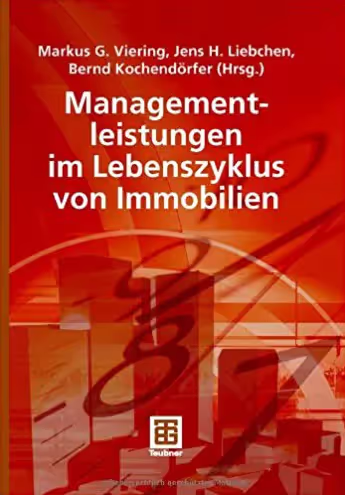

Management Services Throughout the Real Estate Life Cycle
Today, simply constructing a building is no longer enough. Buildings now have a life cycle.
This book is written by civil engineers for civil engineers who are professionally involved in the real estate industry. Every building is subject to a life cycle that incurs costs. These predictable costs must be taken into account during the initial planning stages. The authors provide a comprehensive, practice-oriented overview of all the key management services required for the successful planning, preparation, and execution of a real estate project.

Construction Management and Construction Economics
Current Developments
The market for construction services has become increasingly complex in recent years. Clients are now more frequently demanding not just pure construction services, but also the provision of resources for specific tasks, budgets, and timeframes. For example, companies often no longer just tender the construction of a production plant already fully designed by an architect; they now include the planning, construction, and operation of the building and production logistics for a specific period at a fixed price.
On the government side, the scope of tasks for realizing public infrastructure—such as schools, hospitals, and toll roads—has expanded significantly. The public-private partnership model, for instance, also encompasses organizing the necessary prerequisites for construction, establishing legal and operational structures, project financing, and developing operator concepts, as well as the long-term operation of the projects. This means that a market for construction-related services and the management of construction-related processes has emerged.
This book provides up-to-date knowledge on the financing, planning, and implementation of real estate projects.
